


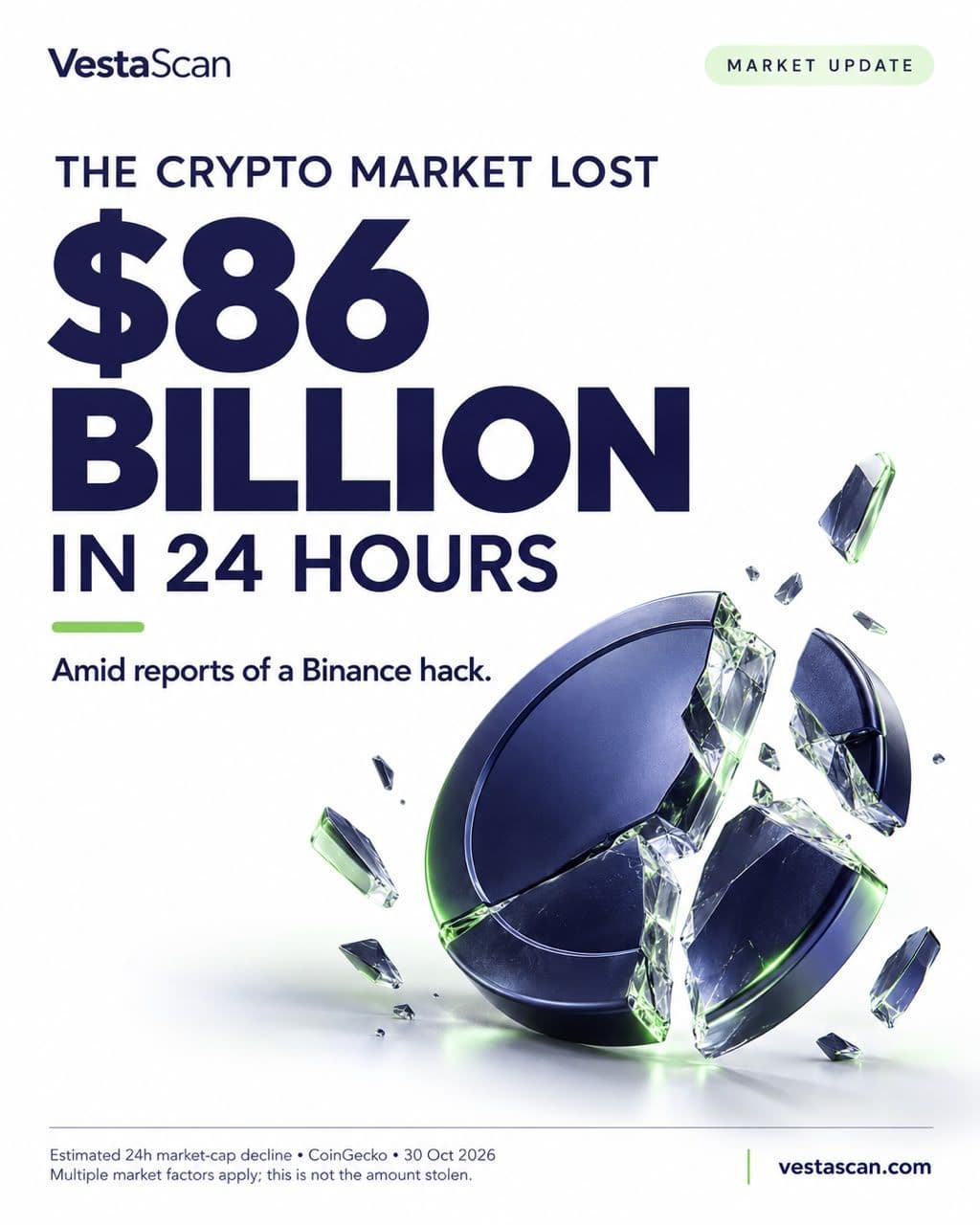
Market volatility after suspected Binance hack
Practical guidance for founders and asset owners to review investor materials and tokenization readiness after sudden market shocks tied to exchange incident reports.
Responding to sudden market shocks after exchange-incident reports
When market headlines point to a major exchange incident, token project teams and asset owners face immediate questions: are the reported figures accurate, how should we communicate with investors, and what operational steps protect our project and reputation? A branded market graphic may report a sharp 24-hour market-cap decline tied to reports of a Binance hack, but such claims should be treated as reported until verified by primary sources.
Start by validating the data. Check the cited market aggregator or exchange notices, and retain timestamps or screenshots of original sources. Avoid amplifying unconfirmed numerical claims as established fact in your investor updates or public channels.
Next, prioritise investor communications. Draft a short, factual update that explains you are monitoring the situation, what you know and do not know, and what steps you are taking. Keep language calm and specific; do not speculate on stolen amounts or regulatory outcomes. This protects credibility and reduces panic among token holders and partners.
Review investor-facing documents and fundraising materials. Market shocks can change timing, expected valuations, or investor appetite. Update pitch materials, term sheets and any documentation that references market conditions or recent valuation figures. Also confirm enquiry handling: ensure a clear point of contact for investor questions and prepare a short FAQ addressing likely concerns.
Operational preparedness matters. While each project’s technical and custody arrangements differ, teams should confirm access to critical documents, share updated contact protocols internally, and ensure any active tokenization timelines can accommodate short delays if needed. Legal and compliance counsel may advise on required disclosures depending on jurisdiction and the nature of investor agreements.
Finally, use available tools to organise and present your project. VestaScan helps founders and asset owners prepare and manage tokenization projects, including token creation support, investor-facing documents and handling enquiries. If your team needs to update presentation materials or document workflows in response to market volatility, consider reviewing readiness and presentation assets on the platform.
Takeaways: verify market claims with primary sources, communicate clearly and calmly with investors, update fundraising and investor materials as needed, and use dedicated tokenization tools to keep documents and enquiries organised.
https://vestascan.com